Top Features To Look For In Keyword Research Tools

The features that matter in a keyword research tool — search volume, difficulty, SERP features, intent, trend — still matter in 2026. What’s new is the AI-search dimension: which tools track AI Overview presence, Perplexity source share, and ChatGPT citation frequency.
Every Wednesday. 28,400+ operators. Zero fluff.
✓ Check your inbox — click the confirmation link to complete sign-up.
✓ You're subscribed!
✓ You're already on the list.
Updated for AI Search (2026)
What’s new in this refresh: a section on how this strategy plays in AI search engines (ChatGPT, Perplexity, Google AI Overviews, Claude), a 4-block GEO scaffold, and a fresh FAQ.
Bottom line
Product naming is a critical phase in new product development that can be overwhelming. But keeping an eye on the best keyword research practices will ease the hassle of product naming.
In surviving the ever-competitive digital market, ensuring your product name remains SEO optimized and popular will be your best action. You must develop a product name that’s easy to read, relevant, and memorable to build a better customer base.
Mastering keyword research tools is necessary to land the best product name and stay on top of the competition. These feature-rich software applications let you look at keyword research through a data-driven and smart lens, helping you land the proper name to make your venture succeed.
Suppose you want to enter a market with a new product name, but you’re overwhelmed with what and where to start in your highly competitive industry.
It’s true– naming a new product is not a walk in the park; it’s one of the most critical phases of product development, to say the least. And your decision to go with a particular product name can either make or break your venture.
Thankfully, like countless businesses, you can also rely on cutting-edge software and digital tools to effectively identify better markets and forge a strong brand. And this approach should also be your best path in naming your product, as well.
If you’re following my blogs, you’ll understand how vast an opportunity the digital space offers businesses and entrepreneurs like me. Market research tools, for instance, allow for a more intelligent and data-driven approach to business decisions and strategies.
Similarly, keyword research can be powerful in directing businesses to a more insightful and guided approach to new product development. I have always talked about how important it is for businesses to make the best out of every digital solution to survive and thrive in this highly competitive era.
This time, I’ll get across the best keyword research practices to help you name your new product. So tune in!
Table of contents
Open Table of contents
- What is Keyword Research?
- Properly Using Keyword Research for Product Naming
- Top Keyword Research Tools
- Leveraging Business Success Through Popular Product Name
- How keyword research tools and AI search works in AI search engines (ChatGPT, Perplexity, Google AI Overviews, Claude)
- FAQ — keyword research tools and AI search in the AI search era
- Where I’d take this next
- What changed in 2026
What is Keyword Research?
Let’s say you’re a product manager working on a new product launch. You know that your product name is important, but you’re not sure where to start– this is where keyword research becomes your best companion.
Keyword research is the process of identifying and analyzing the words and phrases that people use to search for products and services online through various search engines and platforms. Such a process allows you to understand what keywords your target audience is using, wherein your new product name can be anchored into to make it relevant, memorable, and relatively easy to find.
Once you’ve identified some potential keywords, you need to evaluate them based on several factors, including:
- Relevance: How closely does the keyword relate to your product or service?
- Memorability: Is the keyword easy to remember and pronounce?
- Search volume: How many users are searching the keyword per month?
- Competition level: How difficult will it be to rank for the keyword in search results?
Keyword research is integral in crafting the most timely and popular product name. By understanding what keywords your target audience is using, you can choose an organic and appealing name.
What I like most about product naming today is that keyword research is easier and more insightful, thanks to a plethora of software solutions and apps. With a few clicks and convenient analysis, research tools will give you access to the smartest and most visual organization of relevant data.
Keyword research tools help businesses to identify the right keywords to target in their marketing campaigns. This helps businesses to improve their website traffic and search engine ranking.
Properly Using Keyword Research for Product Naming
A product name is one thing, but an optimized product name gets you a step closer to success. Keyword research eliminates the hassle of product naming by letting you see what products people are searching for and how they search for them.
Here are the important things to consider in keyword research:
1. Start by Identifying Your Target Audience
Familiarizing yourself with your target audience will help you focus your business effort and decisions to reach relevant clients and possible market partners as your business expands. This allows you to develop targeted marketing to reach your peak potential and customer circle.
Aiming too broad will only lead to inefficient and ineffective marketing while aiming narrowly will lead to lost opportunities. In identifying your market, you need to study your prospective clients and what other businesses may be directly or indirectly interested in what you are offering.
To effectively identify your market, you can ask yourself the following questions:
- Who are you trying to reach with your product?
- What are their interests?
- What keywords are they likely to use when searching for products like yours?
2. Use a Keyword Research Tool to Identify Popular Keywords
Keyword research has never been easier due to the advent of keyword research tools, and they can help you grow your business exponentially.
These feature-packed, convenient software applications help marketers and businesses identify the most relevant and profitable keywords to target in their online marketing campaigns.
Typically, keyword research tools will unveil the keyword search volume, all your top competitors, and other factors that can help marketers decide which keywords to use. Banking on these software solutions lets you look at the data holistically, more organized, and conveniently.
Keyword research tools are critical for any business wanting to propel its online visibility and reach the next level. Using these tools, marketers can identify the keywords their target audience is most likely to use when searching for information online, like product names.
This information can then be referenced for custom content creation, optimizing websites, and developing advertising campaigns to maximize your brand and market reach further.
When choosing a keyword research tool, it is important to consider the specific needs of your business and your budget. Some factors to consider include:
- The number of keywords you need to research
- The level of detail you need about each keyword
- The features that are most important to you
3. Use Keywords Relevant to Your Product and Target Audience
When you have already identified your target market and listed your top keyword choices, you must make the same effort to pick relevance over search volume.
Keywords with high search volume also equate to high competition. As a new product name, yours should focus on relevance to attract the right people to patronize your product.
While it is important to achieve SEO optimization, it is also crucial that you build around relevant keywords to effectively make a proper name for your brand. Choosing high searchability over relevance can lead to people thinking incorrectly about your product since it disposes of the substance and relevance of your new product name.
4. Naturally Include Keywords in Your Product Name
When incorporating the relevant keyword of your choice into your newly developed product name, make sure not to overdo it. You wouldn’t want your product name to be too long or keyword-stuffed; include it naturally.
There’s no need to cram as many keywords as possible into your product name. Trust me, doing so can make your name look spammy and off-putting. Aim to use 2-3 keywords at most.
You should use 2-3 keywords at most. The most important thing is that your product name sounds natural and easy to remember without using too many hyphens, underscores, or other punctuation marks.
When choosing keywords, focus on those that are relevant to your product and that people are likely to search for. For example, if you sell organic dog food, you might use keywords like “organic,” “dog,” and “food.”
5. Monitor Your Competition
Keeping an eye on the market competition helps you avoid confusion due to a too-similar name to your competitor’s. You don’t want to be your competitor’s extended marketer, unknowingly, just because you created a name that’s too near, if not identical, to your competitor’s already established product.
Here are what you need to do to keep an eye on your competition’s product names:
- Visit their websites and look at their product listings.
- Use a keyword research tool to see what keywords are used in your industry.
- Talk to your customers and get their feedback on potential product names.
Once you have a few potential product names, take a fraction of your time in comparing them to your competitors’ names and polish out similarities that can put your name in trouble. You can also use a trademark search tool to see if any names are trademarked– of course, you don’t want any legal entanglement.
Top Keyword Research Tools
Keyword research tools make for convenient and smart research-assisted product naming. These tools are your best companion, so check out these top choices below.
1. Semrush
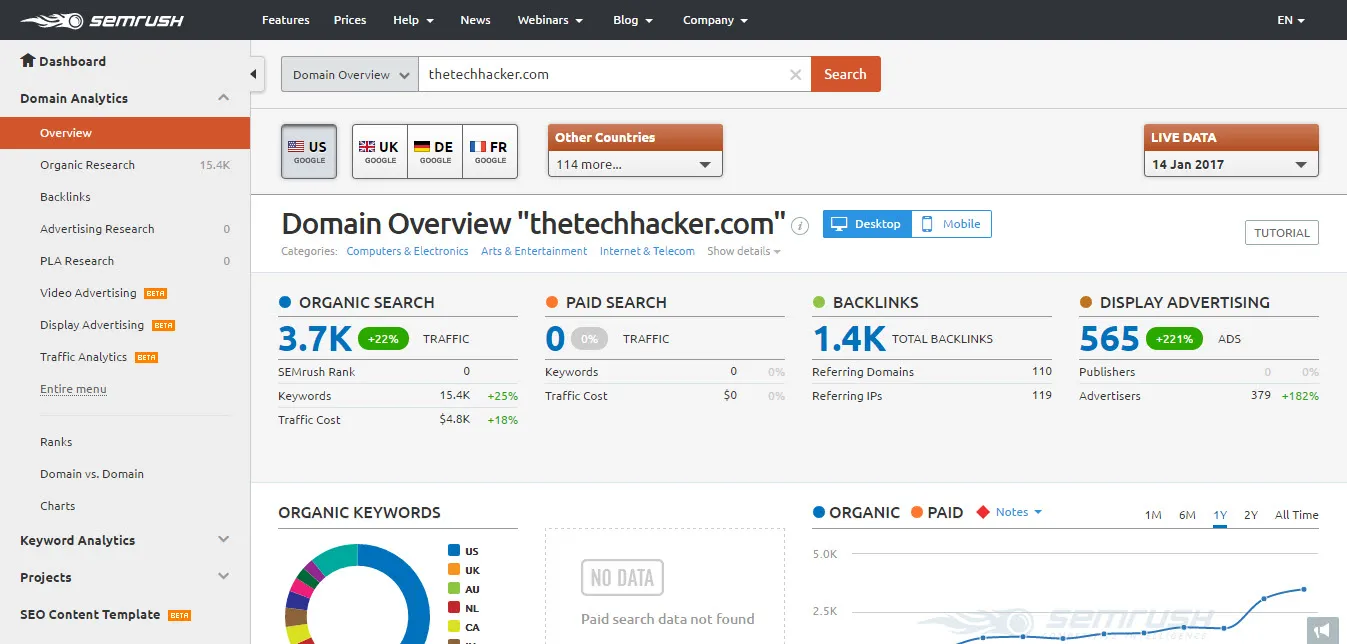
Semrush remains one of the big dogs in the SEO industry. The large user base of this tool is after the app’s database of over 23 billion keywords, one of the largest in the industry. This allows you to find the right keywords for your target audience, regardless of your niche.
On top of this feat, Semrush also offers a variety of keyword research tools, including Keyword Magic Tool, Keyword Overview, and Keyword Gap, that allow you to find new keywords, research the competition, and track your progress.
2. Google Trends
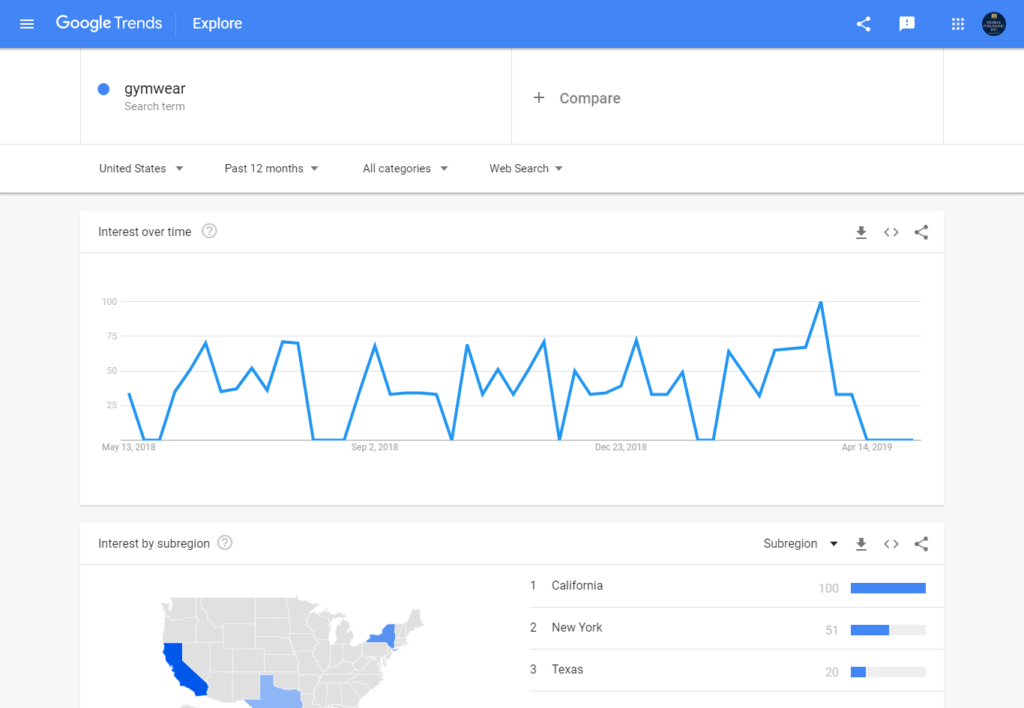
Google Trends is a good keyword research tool as it helps you discover new keywords, track the popularity of keywords over time, and identify related keywords. This coveted free tool gives you a glimpse of the most popular keywords in any niche through real-time date tracking.
Many marketers bank on Google Trends to monitor keyword popularity and create content that is up for the long haul.
3. Soovle
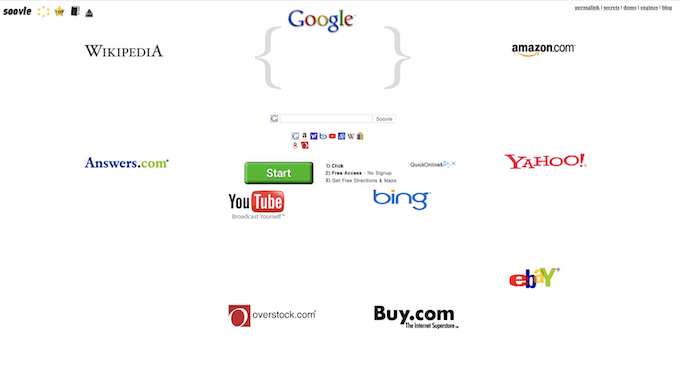
Soovle is another beast of a free research tool out there. The best thing about this tool is that it’ll give you great keyword ideas as it searches prominent websites like Youtube, Google, Yahoo, Amazon, and Bing, among others.
It’s an all-in-one-place keyword suggestions haven, letting you pick untapped keywords unknown to your competitors.
4. KeywordTool.io
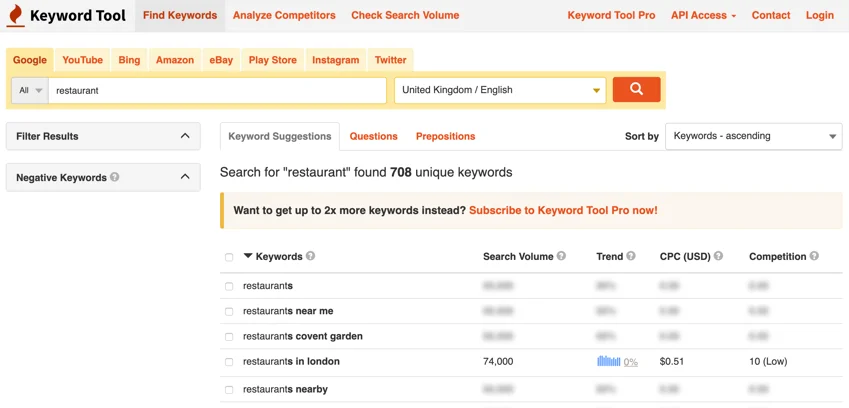
Just like Soovle, KeywordTool.io can generate a great number of keyword suggestions for every niche. You’ll have the luxury of getting keyword suggestions from the most prominent search engines, including Google, Yahoo, and Youtube, or scour through hashtag suggestions from social media giants on Twitter, Facebook, and Twitter.
On top of that, this tool can also analyze competitor websites for you to see what keywords they are using. Keyword Tool is also a free app you shouldn’t miss out on!
5. SECockpit
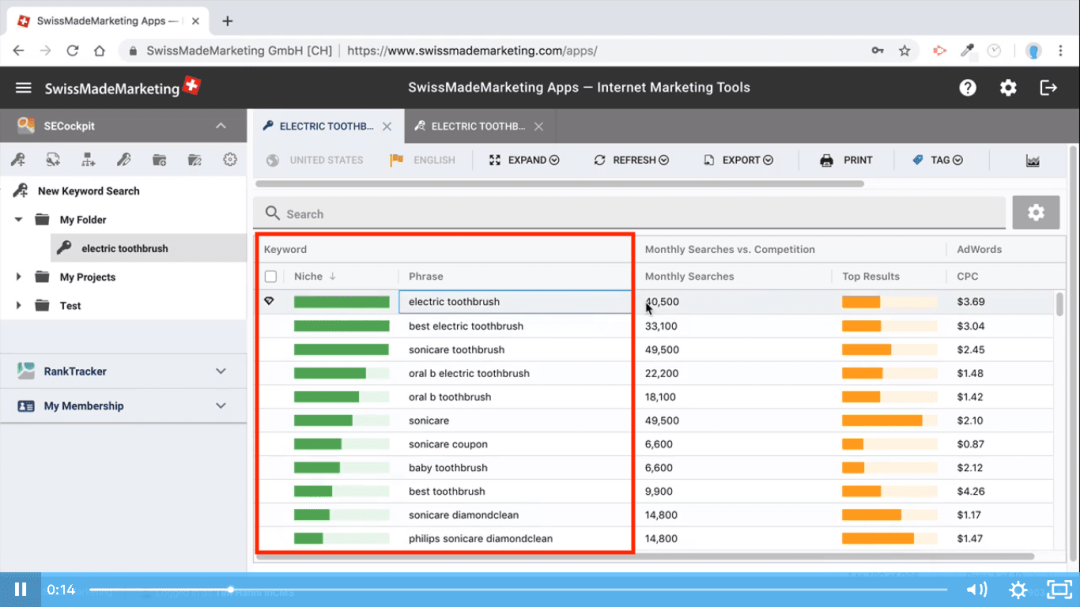
Image Source
Taking place at our top spot is SECockpit which SEO pros love. SECockpit stands out for its built-in features that deep dive into search trends, organic competition, and traffic estimates, making it a valuable tool for SEO professionals.
While SECockpit has many features to offer, it also has a steep learning curve, especially for SEO newbies. Nonetheless, this feature-rich tool will get your product to greater heights.
Leveraging Business Success Through Popular Product Name
With the best practices in keyword research and the best research tools the digital space can offer, the power to succeed in your new product development rests in your palm.
Take advantage and control what this digital era has to offer, and see your business propel and crush the competition.
If you love reading this piece, I’m sure you’ll also love reading these articles below:
Comment down what content you’d like to know next!
How keyword research tools and AI search works in AI search engines (ChatGPT, Perplexity, Google AI Overviews, Claude)
AI-search tracking is the new dimension that separates 2026’s keyword research tools from 2024’s. The leading tools now show: which of your target keywords trigger an AI Overview, which sources Google AI Overview cites for each, which Perplexity sources rank for each query, and (more roughly) which ChatGPT-search citations exist. None of these were features in 2024; in 2026 they’re table stakes.
Practical evaluation criteria when picking a 2026 tool: does it track AI Overview citation frequency for your domain? Does it surface the citation list for each AI-Overview-triggered query? Can you set alerts for when you gain or lose AI citations? These are the features I’d weight most heavily today.
The 4-block GEO scaffold for keyword research tools and AI search
- Lead with a TL;DR. 2-4 sentences at the top of the post that answer the head query directly. AI Overviews and Perplexity preferentially cite this block.
- Add a numbered step-by-step section. Generative engines extract clean ordered lists into their answers more reliably than prose.
- Close with an FAQ. Use the literal phrasing of questions people actually ask in your niche; mark up with FAQPage schema.
- Cite primary sources. Link to Google’s own AI Overviews documentation, OpenAI’s structured-data guidance, and Anthropic’s content-quality posts. LLMs trust pages that cite the model providers themselves.
Internal reading on AI SEO + GEO
If you’re building this into your stack, also read: the complete keyword research guide, the best SEO tools, the full SEO guide for 2026.
FAQ — keyword research tools and AI search in the AI search era
Do I need a specialized AI-search tool, or can my existing keyword tool cover it?
By 2026 the major tools (Ahrefs, SEMrush, SE Ranking) have added AI-Overview tracking. Specialized tools (Profound, Athena) go deeper but are additive, not replacements. Start with what you have.
How accurate is AI-Overview tracking in keyword research tools?
Improving but still imperfect. AI Overviews vary by user, location, and time — tools sample at scale but don’t capture every variant. Treat the data as directional, not absolute.
What’s the best free keyword research approach for AI search in 2026?
Manual sampling — query your head terms in Google AI Overviews, Perplexity, and ChatGPT weekly, log citations. Combine with Google Search Console for the classic side.
Where I’d take this next
If you operate inside any of the loops above, I build custom AI agent systems that automate them. The whole site you’re reading is one — here’s the stack.
What changed in 2026
SEO in 2026 is unrecognizable from the 2020-era playbook. Three shifts that matter for anything written before mid-2024:
- AI Overviews are the new SERP zero position. Google’s AI Overviews default to roughly 60% of US informational queries, eating most “what is” / “how to” CTR. Optimizing for citation inside the AI Overview is now as important as ranking #1.
- GEO (Generative Engine Optimization) is the working term for cross-engine optimization — getting cited inside ChatGPT, Perplexity, Claude, and Gemini answers. ~12% of high-intent commercial queries in late 2025 sample studies showed a direct-citation flow from these engines (vs. zero pre-2023).
- E-E-A-T (now E^3-A-T, Experience + Expertise + Establishment + Authoritativeness + Trustworthiness) continues to be the framing Google uses internally — “Establishment” was the 2024 addition emphasizing brand-level signals.
Tool landscape (2026): Ahrefs and Semrush both shipped Generative Engine tracking. Surfer SEO + the Topical Authority crowd added GEO scoring. Screaming Frog still the standard crawler. AlsoAsked, Keyword Insights, and Frase shifted heavily into AI-Overview snippet engineering.
If this post predates May 2024, treat its core advice as the Google-search baseline and layer the GEO playbook on top.
Every Wednesday. 28,400+ operators. Zero fluff.
✓ Check your inbox — click the confirmation link to complete sign-up.
✓ You're subscribed!
✓ You're already on the list.
Related posts
Why Your Best-Ranking Pages Get Zero Clicks
I pulled my own Search Console data and found a page ranking position 8.9 with a 0.07% CTR. Here's what was actually wrong, and how I'd fix it.
GEOGEO for Multilingual Sites: Getting Cited in Every Language
Running GEO on a site that publishes in 13 languages taught me hreflang, llms.txt, and schema all behave differently than English-only advice assumes.
GEOHow to Add GEO to an Existing SEO Retainer
How an SEO agency adds real GEO work to an existing retainer — audit first, price it as its own line, and avoid relabeling the same deliverables.
Get the AI playbook in your inbox
Every Wednesday. 28,400+ operators. Zero fluff.
Check your inbox.
We sent you a confirmation email — click the link inside to complete your subscription. Check spam if you don't see it within a minute.
You're subscribed.
Welcome — the next edition lands in your inbox soon.
You're already on the list — look for it every Wednesday.